Εμφάνιση αναρτήσεων με ετικέτα Greek cuisine. Εμφάνιση όλων των αναρτήσεων

Σάββατο 14 Σεπτεμβρίου 2019

Flavors of times past

Anna helps her mum
Family is not as it used to be and food on our table isn't either. In our globalized fusion kitchens we tend to experiment with tastes and flavors from all over the world. Greek cuisine is not an exception since the land itself has been the crossroads and the melting pot of different civilizations and cultures for thousands of years. Modern greek cooks cannot identify themselves with what was served on Plato's "Symposium" nor with the extravaganza of the byzantine times.

However, apart from the elaborated dishes that have ornated the tables of the mighty and rich, what actually remains in the collective subconscious is the simple and often poor food, served on the tables of the humble people, dictated by seasonal ingredients and more often than not by what was affordable or available by foraging.

The women of the house, since cooking was a chore totally assigned to them, had to improvise from what little provisions they had in their pantry and provide a meal to satisfy the hunger of a usually extended family. A household which had stored in its cellar flour, olive oil, cheese and wine, was considered to be well-off and the rest of the staple foods were provided by the kitchen garden for vegetables and herbs and the nearby fields or forest for greens and various nuts.

Areas near the sea were also blessed with an abundance of fish and seafood and the mountainous people relied on hunting, mostly birds and hares. Wild boars have never become extinct even though they were hunted fiercely because they damaged farmer's crops.
Selling fish


Farm animals were mostly raised for their products - milk, eggs, wool- and rarely consumed as meat,

A very popular traditional wedding song says " In my child's joy (=wedding), we slaughtered a rooster"! Imagine a feast, where the whole village was usually invited, with only one chicken as the centerpiece of the celebratory dinner!

This culture of self-sufficiency is gaining ground worldwide, especially in times of economic crisis such as these but I wouldn't imagine myself making an absolute 180⁰ u-turn and start doing everything from scratch. What I'd really like to do is to preserve those unfamiliar and unknown recipes, handed down from our grandmas, and maybe, just a little, taste the original flavors of a difficult but equally fascinating bygone time.

(The pictures for this post were taken from the alphabet book of my childhood)
unless they were very old or on festive days, such as Christmas or Easter. Even then they made the most of them and nothing was wasted.


Πέμπτη 12 Σεπτεμβρίου 2019

Lazy Girl's Pasta

Lazy Girl's Pasta


A popular greek saying goes like "a greek mum knows everything except for tonight's dinner" 😂😅, and who am I to disagree?

When it comes to desperation the best solution is pasta and an especially quick version for working (or lazy) girls like me, is this "pastitsio".

I was given the recipe by my late aunt Ifigeneia (I will always remember Robin Williams in "Mrs Doubtfire") when I was very young and just learning how to cook. It was a hit from the very first day!

This is an all-in-one pan recipe. The ingredients are for 6, or 4 very hungry people!!!

We'll need
500 grams of  big tube-like pasta such as rigatonni, raw, not cooked!
300 grams of crumbled feta cheese or similar goats cheese
150 grams of grated hard cheese such as "kefalotiri" or "pecorino"
5 medium size eggs
3.5 glasses of milk (about 1lt)
3.5 glasses of water

The original recipe didn't include it, but you can add 100 grams of chopped salami or bacon.


Preheat your oven at 180C. Put some oil or melted butter in a baking pan and throw inside the pasta, the cheeses, the salami and the water and 2 glasses of milk. Beat the eggs with the rest of the milk and pour it also in the pan. Use a big laddle spoon to mix them all and put it in the oven. Wait for about 45 min to 1 hour until the top is set and it's got a nice golden brown color. Ready!

Enjoy!


Κυριακή 13 Μαΐου 2018

Spicy Hot Cheese Dip

Τυροκαυτερή - Spicy Hot Cheese Dip
Spicy hot and cool at the same time, this dip is a perfect company to roast or grilled meat. You can order it at almost any "taverna" around the country and its color or "heat" depends on the chef. Personally I prefer the Northern Greek version made with roasted red Florina peppers. And I use only one of those almighty chillies. 😛

200 grams Feta cheese or some other crumbly goat cheese
100 grams "anthotyro" or ricotta cheese
1 chilli pepper
1 green and one red bell peppers (or two roasted red peppers from a jar)
5 tbs olive oil
1 tbs vinegar

If you use fresh peppers, put them in a bake dish and roast them until they become brown-black. Put them in a bowl, cover with cling-film and let them rest for 20 minutes. This way it will be much easier to peel them and de-seed them.
Put all the ingredients in a food processor, push the button and voila!, stop when you like the texture of the mix. Some people prefer it more crumbly while I prefer it more smooth. Check the salt and the vinegar and put in the fridge at least for 30 minutes before serving.

Enjoy! Kali Orexi!

Τρίτη 25 Οκτωβρίου 2016

Beef Burgers and Potatoes


The daily nightmare is back What shall I cook today? First glance in the freezer: Only beef minced meat.Now in greek cuisine this may result in many different dishes from the most complicated, such as "mousaka" to the most simple ones such as "spaghetti bolognese". Today I'll go simple and make beef burgers and potatoes roasted in the oven.

- 500 grams of minced beef
- 1 large chopped onion
- 300 grams breadcrumbs*
- 1 cup water
- 1 full tablespoon of each: chopped mint, chopped parsley
- a pinch of thyme leaves and rosemary
- 100 ml olive oil
- 1 teaspoon salt and a pinch of black pepper.

* For a gluten-free recipe replace the bread with 8 tablespoons of oats.

Mix all the ingredients in a bowl until you have a soft mixture. Add more water if you have to. Put the bowl in the fridge for half an hour so that the flavours develop. Meanwhile, peel the potatoes, cut them into large chunks, add some salt and, if you like, paprika.

In a well-oiled baking tray, form burger patties, place the potatoes around and add 1 glass of water. Sprinkle with olive oil and put in a pre-heated oven at 220C for about an hour.

A glass of wine and greek salad with feta cheese would be the best company.

Enjoy!

Τρίτη 5 Απριλίου 2016

Stuffed vine leaves "Dolmadakia"

Stuffed vine leaves with ground beef and rice
It is a different flavor. It is true that not everyone likes them, especially if your first try is with preserved vine leaves which sometimes are very tough and leave the impression that chew a package along with its string!
But the fresh leaves are tender and melt in your mouth. Their sour taste raises the usually indifferent ground beef and make them memorable.
For a few days a year, April and May, when I find fresh leaves in the market, I wash, drain and put them in the freezer. From there directly to scalding and I have fresh leaves for another three months at least. I like to stuff them with a mixture of ground beef and rice but there is also the vegetarian alternative, only with rice.
For 4 people we need:250 grams of grape leaves

1 large onion, chopped1 1/2 cup of olive oil 1 cup of rice300 grams of ground beef1 shot of ouzo (optional)1 cup warm watersalt, pepper, a handful of fresh mint, choppedthe juice of a large lemon
Wash the leaves and add little by little in salted boiling water. Let stand 3 minutes, then put into a bowl with cold water. Once you finish the process put them in a colander until you prepare the filling.
In a small bowl put the minced meat, onion, rice, 1/2 cup oil, mint, salt, pepper and ouzo. Mix to make a mixture soft enough, and if necessary add a little water.
With a spoon take a bit stuffing and place on the base of the leaf. Fold both ends and then wrap them in a 

roll. The truth is that at the beginning it needs a little effort to get down to the point but after the 4th or 5th dolmadaki you'll have no problem.
We throw the remaining oil to the pot and place each dolmadaki in concentric circles from the outside to the center. Depending on our pot we will make one or two layers.
Sprinkle with a little more oil to the surface and cover into the pot with a plate upside down. This will help to keep them firmly in place and not unfold with cooking. Add enough hot water to reach the middle of the dish, cover the pot and simmer for about half an hour.
Once ready, remove from heat and pour the lemon juice. Cover again and leave to cool completely. So it is better to start cooking early.
We can accompany with extra egg-lemon sauce or even with tzatziki.
Good appetite.


You can find the recipe in Greek here.
 

Τρίτη 23 Σεπτεμβρίου 2014

Greek comfort food


Makaronia me kima

Everyone and each of us have a favorite primitive memory of his favourite comfort food. Food that consoles, bringing back warm memories of motherly hugs and sweet kisses. Of Sundays around the family table and of the tantalizing smell of a home-cooked meal, wafting in the air at least fifty metres before arriving at the house door.

Although each home has its own specials, there must be a national memory rooted deep inside our genes which characterizes our crave for certain dishes. Those cooked by our mothers or grandmothers and which are registered in our subconscious mind as our safe haven from exterior threats.

Pastitsio
For many years, during the “speaking session” in my classes, I’ve been asking my students the same personal question: “Which is your favourite food?” Seven times out of ten, the answer was “Makaronia me kima”, that is spaghetti with minced meat sauce. The eighth was “pastitsio”, the more elaborated version of the same dish but this time topped with beschamel sauce and gratined. The ninth was either “souvlaki” or”pizza. Finally the tenth was usually the food that their mum used to cook best for the Sunday family reunion, such as roast lamb or chicken and potatoes.

Yemista
But the most interesting of all were the answers I got when I probed them a little more. Sometimes I got answers like “yemista” (stuffed tomatoes) “spanakopita” (spinach pie) or even “lahanodolmades” (cabbage leaves stuffed with meat, rice and herbs).
Patsas Soup


Surprisingly, “chicken soup” was not among them at all. On the other hand some of my students mentioned “patsa” a soup made with the legs and the stomach of an animal (mainly beef or pork) or “trahana”.a soup made with a traditional pasta, consisting of bulgur wheat and milk. The traditional “fasolada” (bean soup) is not so popular though a necessary evil, tolerated during the fasting weekdays (Wednesday and Friday) when
neither meat nor fish is permitted by the Christian Orthodox Church. Many a times when I mentioned it, I found myself confronted with grimacing faces.

So, which is your favourite comfort food? What reminds you of "mum"?


Δευτέρα 22 Σεπτεμβρίου 2014

"Red" Giouvarlakia

Few tourists in Greece ever get to know the dishes that make us bow to our "mama's" comfort food.
One of these, is "Giouvarlakia", that is meatballs with rice, either in the form of a soup or with a thick egg-lemon (avgolemono) sauce.
Actually I prefer the second version - that's the way my mum used to cook it - so I like to pay homage to her cooking many times during the winter.
However, I'm such a fun of the dish that I experimented with this summer alternative, using fresh tomato instead of the egg-lemon sauce. The result was a fusion between "giouvarlakia" and "soutzoukakia" which made us all clean our plates with big chunks of freshly baked bread.
I thought you would like this version which is much easier, since it doesn't require the tricky "avgolemono".

- 750 grams of beef mince (or any kind of mince)
- 1 cup of rice, the type you usually buy for soups
- 1 thinly chopped onion
- 1 teaspoon salt
- 1/4 of a teaspoon grounded cumin
- 1 crashed garlic clove
- 1/2 cup red wine
- 500 grams finely chopped fresh tomatoes or tomato juice
- 1/2 cup of olive oil
- a pinch of each: grounded pepper, cinnamon, clove
- 1 fresh or dry bay leaf.

In a large bowl, we mix together the minced beef, the rice, the onion, the spices, half the olive oiland the wine. While mixing, add some spoonfuls of water until you have a very soft mixture. Put the bowl in the fridge and let it rest for about 1 hour.
In a large cooking pot we put the rest of the olive oil, 4 cups of water and the tomato and we let come to the boil. Then we add some salt, and the bay leaf and we turn down the temperature to medium. We form small balls with our mixture, the size of a walnut, and we drop them carefully into the simmering sauce.
Cover the pot and let it simmer until the rice is well cooked (about 1 hour). In the meantime you can add some hot water if you thing it is needed.
The final consictency should be that of a thick soup as it will become thicker when it cools. It can be eaten warm or in room temperature, after all that's why I cook it in the summer.
You can also experiment with your favorite spices, either inside the mixture or in the broth.
Finally if you want the original version, don't add tomato in the beginning but when the food is cooked add the "avgolemono" sauce.
You can see my step-by-step tecnique here.

You can also find the recipe on my sister Greek blog here.


Kali orexi!


Κυριακή 20 Οκτωβρίου 2013

"Pastitsado" from Corfu

During my many years of "wandering" round Western Greece, I picked up many local recipes which became our favourite Sunday meals.

One of the most appreciated is "Pastitsado", from the island of Corfu. It usually refers to a chicken stew (usually poor old roosters) - "kokoros pastitsado"- served over very large macaroni or penne pasta. However it is also made with veal or beef which do not have to be from the expensive cuts.

There are many recipes in books or on the internet, yet nothing compares to the original flavour at a local house or a taverna. The difference lies on the one hand in the use of local products and on the other hand in the correct balance of herbs and spices. Cloves, allspices and rosemary along with red wine and a bit of vinegar, add to the final distinctive taste.

Today I cooked beef pastitsado but with white rice instead of pasta. It was equally tasty though lighter for our digestive system!

What you need:

- 1 kilo beef meat, in small chunks (If you use a country chicken, have it cut in portions)
- 1/2 cup of olive oil
- 1 full tbsp of butter
- 2 large onions finely chopped
- 2-3 garlic cloves, chopped
- 1/2 cup red wine
- 4 medium size ripe tomatoes chopped (or 400 grms tomato juice)
- salt, pepper (optionally 1 small chili pepper)
- 4 whole cloves, 5 whole allspices, a pinch of fresh rosemary leaves
- 1 tbsp wine vinegar (plain or balsamic)

Heat the olive oil and the butter in a deep casserole. Add the chunks of meat and stir-fry for a few minutes. Add the onions, the garlic, salt, pepper and the spices. Fry for a few minutes, pour in the wine and let it evaporate. Finally add the tomatoes and the vinegar, put on the lid and let it simmer for about one hour and a half. Boil some rice or pasta and serve with some grated cheese on the top.

Bon apetit - ΚΑΛΗ ΟΡΕΞΗ!

Τρίτη 15 Οκτωβρίου 2013

Marinated Salted Anchovies

I'm doing my best with the last anchovies of the fall, before their price climbs again to unreachable heights.
I pull off  the intestines from the ancovies and the central fishbone. I put the fillets in layers in a shallow bowl and in between I sprinkle salt and vinegar. I let them rest for 24 hours in my fridge, and then put them in a strainer. Finally (in a plastic container) I make beautiful layers of anchovies, olive oil, finely chopped garlic, parsley and chilli pepper.
They keep well in my fridge for about a month.
I usually serve them as a meze for ouzo or tsipouro, bu they also accompany wonderfully winter soups with legumes such as beans (fasolada) or lentils fakes)!

Τετάρτη 29 Μαΐου 2013

Fish "Savoro" (marinated)

Fish "Savoro"
We're half between Easter and the Pentecost,  namely the Mid-Pentecost. Traditionally we eat fish today so here is a favorite dish of mine and quite an easy recipe.

I usually use red mullet or pandora fish (greek λιθρίνια) for this but it can be done with any type of medium size fish.

It is a recipe mainly of the greek islands and the "savoro" sauce was a good way to preserve leftover fried fish for the following day. They are much tastier, I can assure you! Try to make this dish at noon and serve it in the evening supper. Uncomparable!!!!

Get ready for cooking:

- 1 1/2 kilo of fish (ask your fishmonger to clean it, if it's too much touble for you)
- plain flour for the frying and thesauce
- salt, peper
- 250 grams of olive oil (for the frying and the sauce afterwards)
- 1 small glass of wine vinegar
- 300 grams fresh tomato juice
- 2-3 garlic cloves
- 2 sprigs of fresh rosemary or 1 tablespoon dry leaves
- lemon juice
- 1 teaspoon caster sugar

Clean, wash and drain your fish, add plenty of salt and drizzle with lemon juice. Let it marinate for some minutes.

Pat it dry with some kitchen paper, flour it and fry it in small batches. Place it in rows on a large plate.

Using a sieve, drain the remaining of the frying oil into a clean sauce pan. Let it heat and the garlic in thin slices. Don't let it burn but add in the saucepan 4 level tablespoons of plain flour. Stir well until it gets a golden brown colour and add the vinegar. Add the rosemary, the tomato juice, the sugar, some salt and pepper and let them simmer until the tomato is cooked and the sauce is thick enough.

Drizzle over the fish and let it cool for at least 30 minutes before you serve so that the fish absorb the sauce.

Kali orexi!

Τετάρτη 10 Απριλίου 2013

Pork Stew with Leeks and Plums


This is a recipe from the region of Macedonia, in Northern Greece. It was posted on Google+ by Xaris Xaris and I was given permission to translate it. Enjoy!

Ingredients

1 kilo of pork meat, preferably from the shoulder, cut in pieces
1 kilo of leeks, only the white part, cut into slices
5 tablespoons celery, finely chopped
1 small onion, finely chopped
1 level tablespoon tomato puree
10 dry plums, cut in halves
¾ of a cup extra virgin olive oil
salt, freshly ground black pepper

Saute slightly the onion with the olive oil, add the pork and let it get golden brown on all sizes. Add 1 cup of hot water, a little salt and let it simmer for about 30 minutes. Take the pork out of the pot and keep it warm on a large plate. Add the leeks in the pot (if you like you can blanch them before), 2 cups of water, a little salt and cook on medium temperature for another 25 minutes. Finally, put the pork back in the pot with the leeks, add the tomato puree dissolved in a little water, the plums and the celery. Stir only once and simmer for another 20 minutes until most of the liquid is evaporated and there is only a thick sauce in the pot.
Serve this dish warm with freshly ground black pepper on top.

Τρίτη 9 Απριλίου 2013

Black Risotto with Cuttlefish from the Aegean Islands (Σουπιοπίλαφο)


Ok, I know this sounds very Italian, however it’s a traditional recipe of the Cyclades, the Aegean islands. 
It is also expected from a maritime people who had long-term relationships with the italian cities of Venise and Genoa, through conquer and trade, to adopt and adapt many of their recipes. 
After all, the use of seafood such as octopus, cuttlefish and calamari is extensive throughout the coastal cities of the Mediterranean. 
You can buy fresh cuttlefish from your seamonger or deep-frozen ones, which usually come from the Indian Ocean. 
One way or the other, you have to clean them carefully so as not to destroy the precious little pouch which contains the black ink. This is responsible for the black colour of the rice and also those black spaghetti that you so much admire at the shelves of your local deli.

You wiil need:

  • -        1 kilo of cuttlefish (fresh or frozen)
  • -        2 large onions, diced
  • -        1 large cup of olive oil
  • -        3 large ripe tomatoes, diced
  • -        500 grams rice
  • -        2 level teaspoons of salt, a little pepper
  • -        the ink of the cuttlefish

The traditional recipe suggests that you use all the ink pouches from 1 kilo of cuttlefish, though I wouldn’t recommend it if you cook this for the first time. Just use 1 pouch and if you like the result you can increase it the following time.

Clean carefully the cuttlefish and wash it under running water. Cut it in bite size and let it dry in a drainer. Put the ink in a bowl and disolve it with a little water. Usually there is some sand which will naturally sit at the bottom of the bowl, so be careful when you add the liquid to the food.

Saute the onion with the olive oil, add the cuttle fish and stir in high temperature for a few minutes. Add the tomatoes, salt and pepper and let it simmer for one and a half hour. When the are cooked (they must be soft, not like rubber) add the ink and as much water as to amount up to 4 cups of liquid. Let it come to the boil, add the rice, stir once, turn down the heat, put the lid on and let it simmer until the rice is cooked to your liking. Don’t forget to stir occasionally because the rice tends to stick at the bottom of the pot, and then you’ll literally have “charcoal”  rice.

Serve it in room temperature accompanied by cool white wine or beer.

Good apetite! Kali Orexi!


Δευτέρα 8 Απριλίου 2013

Seftalies (Σεφταλιές) from Cyprus

Seftalies 
It's a quite simple recipe, just burghers wrapped in caul of fat. Half a teaspoon of cinnamon powder gives that extra kick in the mix. The size varies from burghers to meatballs but I prefer the the latter since the feeling of the fat is minimum. The best option is to grill them in your BBQ, but yesterday it was a rainy day here, so I put them under the grill in my oven ant they were equally great. The caul of fat I had was rather small, so I made small meatballs with the rest of the stuffing.

Now, the ingredients:

- 750 grams mince (I used 500 grams lamb ans 250 beef, but you can also use pork)
- 1 large onion
- half a loaf stale bread, without the crust, soaked in water and then squizzed
- 1 bunch of parsley
- 1 egg
- 1/2 tsp ground black pepper
- 1/2 tsp cinnamon powder
- 2 level tsp salt
- caul of fat

caul of fat

Put the mince in mixing bowl.
Add the bread, the onion and the parsley finely chopped, the egg, salt, pepper and the cinammon.
Mix well and let it rest in the fridge for half an hour.

Take the coul of fat and put it in a bowl with tiepid water and two tablespoons of wine vinegar.
Rinse it and strain it wit a clean kitchen towel.
Put it on your working surface and cut strips of 8 cm in diameter.

Take a small quantity of your stuffing and wrap it with the caul of fat, just as you would with spring rolls.

Grill them until the fat gets a golden brown colour and serve them with fried potatoes (This time of year we have plenty of Cypriot potatoes) and a green salad.
We like finely chopped lettuce with spring onions and dill, drizzled with extra virgin olive oil and wine vinegar.

If you want to be more authentic, serve also some fried haloumi cheese.

Good Morning Cyprus!

Τρίτη 19 Μαρτίου 2013

Melitzanosalata - Eggplant dip

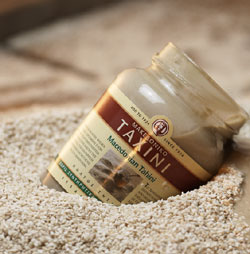
This is a specialty from Epirus, in Northwestern Greece. There are many varieties of this dip around Greece and there is also a manufactured version which uses mayonnaise. The actual recipe, however, was created as an alternative for the fasting days during the Great Lent (the forty days before Easter) when the diet must be strictly vegetarian. What makes this recipe special is not that much the eggplant per se, but the "tahini", the sesame puree, which enhances the flavor and makes it more intense. There is also a different version which instead of tahini uses roasted ground almonds. It's just a matter of taste and all you have is to experiment yourselves. It's an ideal mezes and accompanies ouzo and tsipouro perfectly.

You'll need:

  • 1 kilo of large round eggplants
  • 2 large onions
  • 2 medium lemons (the juice)
  • 100-150 grams extra virgin olive oil
  • 200 grams tahini (sesame puree)
  • 100 grams dry breadcrumbs
  • some chopped parsley
  • salt, pepper
Put the eggplants whole in a baking dish and roast them in the oven for 30 minutes or until their skin is slightly burnt. Take them out off the oven, put them in a bowl, cover them with cling film and let them cool down for about 10 minutes. This way it will be much easier to peel them.
Put the flesh of the eggplant in a food proccessor, add the salt, peper, parsley and onion. Mix them for 1 minute, then add 1/3 of the olive oil and 1/3 of the lemon juice. Mix again for two minutes, add the rest of the oil and the lemon. Pour the sesame puree in the mixture, in small doses, making sure that the mix is getting homogeneous. Finally add as many breadcrumbs as you think it needs to become firm. Taste for salt and peper and put in the fridge for an hour. As with all mixtures, this will help the flavors to develop.

Drizzle with extra virgin olive oil and serve with toasted rustic bread!

Good Apetite and have a Nice Great Lent! Kali orexi kai Kali Sarakosti!


Κυριακή 17 Μαρτίου 2013

Boxades (greek: μποξάδες)


Boxades, meaning handkerchifs, are small pies stuffed with lamb's meat and casseri cheese. It's a local recipe of Crete, though a larger version of a pie can also be found in Cyclades. It is better to use ready-made thin phyllo pastry rather than homemade because it's thinner and they are easier baked.They are an excellent appetizer and can be accompanied by a cool plate of tzatziki or plain yogurt.

We'll need:
  • 1500 grams lamb's meat, preferably from the rear leg
  • 500 grams of kasseri cheese, or another yellow semi-hard cheese
  • 15 sheets of thin phyllo pastry
  • 200 grams butter
  • 1 cup extra virgin olive oil
  • dry oregano, salt, peper 


Wash the meat and cut in bite size pieces. Put them in a bowl, add the oil, oregano, salt and pepper. Stir them once and let them marinate for half an hour.
Meanwhile, prepare your phyllo. Spread the sheets on your working surface and cut them in four stripes. Cut also the kasseri cheese in thin slices of 6-7 cm.
Using a kitchen brush, spread each phyllo sheet with melted butter, put one slice of cheese on one end, add 2-3 pieces of meat and roll them tight, just as you would a spring roll. These are the boxades.
Brush a baking dish with butter too, and place the ready rolls in it next to each other. On top of each roll put a tiny bit of butter.
Bake in medium oven (180 C) until they are golden brown. Serve them warm, preferably with a red wine from Crete.

Good Apetite! Kali orexi!

Πέμπτη 14 Μαρτίου 2013

Avgotaraho

Avgotaraho = A Taste with… History. 

Avgotaraho has been considered a delicacy since the era of the Pharaohs and it was an important element in the Ancient Greek diet. Its value was also known in Byzantine times, while nowadays it occupies a prominent place among gourmet products. 
A delicacy of cured Grey Mullet Roe. Natural without preservatives, with high nutritional value and a pleasant long-lasting aftertaste. 
Produced exclusively from Grey Mullet Roe, recognized as the best roe for Avgotaraho production. 
Standardized production techniques properly balance the salting and drying processes to deliver higher moisture and lower sodium in the final product. It is coated by natural bee’s wax, which sufficiently preserves the product and its delicate taste during its shelf life, despite the low sodium content. It constitutes a rich source of omega-3 fatty acids, which reinforce body health by acting positively on the cardiovascular system and by strengthening the immune system.


LinkWithin

Related Posts Plugin for WordPress, Blogger...