Τρίτη 9 Απριλίου 2013

Black Risotto with Cuttlefish from the Aegean Islands (Σουπιοπίλαφο)


Ok, I know this sounds very Italian, however it’s a traditional recipe of the Cyclades, the Aegean islands. 
It is also expected from a maritime people who had long-term relationships with the italian cities of Venise and Genoa, through conquer and trade, to adopt and adapt many of their recipes. 
After all, the use of seafood such as octopus, cuttlefish and calamari is extensive throughout the coastal cities of the Mediterranean. 
You can buy fresh cuttlefish from your seamonger or deep-frozen ones, which usually come from the Indian Ocean. 
One way or the other, you have to clean them carefully so as not to destroy the precious little pouch which contains the black ink. This is responsible for the black colour of the rice and also those black spaghetti that you so much admire at the shelves of your local deli.

You wiil need:

  • -        1 kilo of cuttlefish (fresh or frozen)
  • -        2 large onions, diced
  • -        1 large cup of olive oil
  • -        3 large ripe tomatoes, diced
  • -        500 grams rice
  • -        2 level teaspoons of salt, a little pepper
  • -        the ink of the cuttlefish

The traditional recipe suggests that you use all the ink pouches from 1 kilo of cuttlefish, though I wouldn’t recommend it if you cook this for the first time. Just use 1 pouch and if you like the result you can increase it the following time.

Clean carefully the cuttlefish and wash it under running water. Cut it in bite size and let it dry in a drainer. Put the ink in a bowl and disolve it with a little water. Usually there is some sand which will naturally sit at the bottom of the bowl, so be careful when you add the liquid to the food.

Saute the onion with the olive oil, add the cuttle fish and stir in high temperature for a few minutes. Add the tomatoes, salt and pepper and let it simmer for one and a half hour. When the are cooked (they must be soft, not like rubber) add the ink and as much water as to amount up to 4 cups of liquid. Let it come to the boil, add the rice, stir once, turn down the heat, put the lid on and let it simmer until the rice is cooked to your liking. Don’t forget to stir occasionally because the rice tends to stick at the bottom of the pot, and then you’ll literally have “charcoal”  rice.

Serve it in room temperature accompanied by cool white wine or beer.

Good apetite! Kali Orexi!


Δευτέρα 8 Απριλίου 2013

Seftalies (Σεφταλιές) from Cyprus

Seftalies 
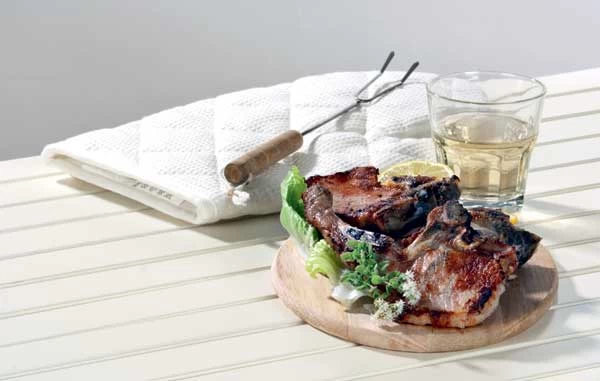
It's a quite simple recipe, just burghers wrapped in caul of fat. Half a teaspoon of cinnamon powder gives that extra kick in the mix. The size varies from burghers to meatballs but I prefer the the latter since the feeling of the fat is minimum. The best option is to grill them in your BBQ, but yesterday it was a rainy day here, so I put them under the grill in my oven ant they were equally great. The caul of fat I had was rather small, so I made small meatballs with the rest of the stuffing.

Now, the ingredients:

- 750 grams mince (I used 500 grams lamb ans 250 beef, but you can also use pork)
- 1 large onion
- half a loaf stale bread, without the crust, soaked in water and then squizzed
- 1 bunch of parsley
- 1 egg
- 1/2 tsp ground black pepper
- 1/2 tsp cinnamon powder
- 2 level tsp salt
- caul of fat

caul of fat

Put the mince in mixing bowl.
Add the bread, the onion and the parsley finely chopped, the egg, salt, pepper and the cinammon.
Mix well and let it rest in the fridge for half an hour.

Take the coul of fat and put it in a bowl with tiepid water and two tablespoons of wine vinegar.
Rinse it and strain it wit a clean kitchen towel.
Put it on your working surface and cut strips of 8 cm in diameter.

Take a small quantity of your stuffing and wrap it with the caul of fat, just as you would with spring rolls.

Grill them until the fat gets a golden brown colour and serve them with fried potatoes (This time of year we have plenty of Cypriot potatoes) and a green salad.
We like finely chopped lettuce with spring onions and dill, drizzled with extra virgin olive oil and wine vinegar.

If you want to be more authentic, serve also some fried haloumi cheese.

Good Morning Cyprus!

Τρίτη 19 Μαρτίου 2013

Melitzanosalata - Eggplant dip

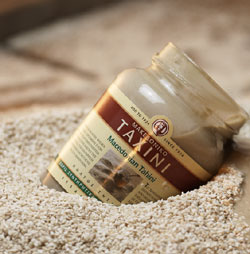
This is a specialty from Epirus, in Northwestern Greece. There are many varieties of this dip around Greece and there is also a manufactured version which uses mayonnaise. The actual recipe, however, was created as an alternative for the fasting days during the Great Lent (the forty days before Easter) when the diet must be strictly vegetarian. What makes this recipe special is not that much the eggplant per se, but the "tahini", the sesame puree, which enhances the flavor and makes it more intense. There is also a different version which instead of tahini uses roasted ground almonds. It's just a matter of taste and all you have is to experiment yourselves. It's an ideal mezes and accompanies ouzo and tsipouro perfectly.

You'll need:

  • 1 kilo of large round eggplants
  • 2 large onions
  • 2 medium lemons (the juice)
  • 100-150 grams extra virgin olive oil
  • 200 grams tahini (sesame puree)
  • 100 grams dry breadcrumbs
  • some chopped parsley
  • salt, pepper
Put the eggplants whole in a baking dish and roast them in the oven for 30 minutes or until their skin is slightly burnt. Take them out off the oven, put them in a bowl, cover them with cling film and let them cool down for about 10 minutes. This way it will be much easier to peel them.
Put the flesh of the eggplant in a food proccessor, add the salt, peper, parsley and onion. Mix them for 1 minute, then add 1/3 of the olive oil and 1/3 of the lemon juice. Mix again for two minutes, add the rest of the oil and the lemon. Pour the sesame puree in the mixture, in small doses, making sure that the mix is getting homogeneous. Finally add as many breadcrumbs as you think it needs to become firm. Taste for salt and peper and put in the fridge for an hour. As with all mixtures, this will help the flavors to develop.

Drizzle with extra virgin olive oil and serve with toasted rustic bread!

Good Apetite and have a Nice Great Lent! Kali orexi kai Kali Sarakosti!


Κυριακή 17 Μαρτίου 2013

Boxades (greek: μποξάδες)


Boxades, meaning handkerchifs, are small pies stuffed with lamb's meat and casseri cheese. It's a local recipe of Crete, though a larger version of a pie can also be found in Cyclades. It is better to use ready-made thin phyllo pastry rather than homemade because it's thinner and they are easier baked.They are an excellent appetizer and can be accompanied by a cool plate of tzatziki or plain yogurt.

We'll need:
  • 1500 grams lamb's meat, preferably from the rear leg
  • 500 grams of kasseri cheese, or another yellow semi-hard cheese
  • 15 sheets of thin phyllo pastry
  • 200 grams butter
  • 1 cup extra virgin olive oil
  • dry oregano, salt, peper 


Wash the meat and cut in bite size pieces. Put them in a bowl, add the oil, oregano, salt and pepper. Stir them once and let them marinate for half an hour.
Meanwhile, prepare your phyllo. Spread the sheets on your working surface and cut them in four stripes. Cut also the kasseri cheese in thin slices of 6-7 cm.
Using a kitchen brush, spread each phyllo sheet with melted butter, put one slice of cheese on one end, add 2-3 pieces of meat and roll them tight, just as you would a spring roll. These are the boxades.
Brush a baking dish with butter too, and place the ready rolls in it next to each other. On top of each roll put a tiny bit of butter.
Bake in medium oven (180 C) until they are golden brown. Serve them warm, preferably with a red wine from Crete.

Good Apetite! Kali orexi!

Παρασκευή 15 Μαρτίου 2013

Retsina, the Umber wine


Retsina (Greek: Ρετσίνα) is a Greek white (or rosé) resinated wine, which has been made for at least 2000 years. 
Its unique flavor is said to have originated from the practice of sealing wine vessels, particularly amphorae, with Aleppo Pine resin in ancient times.
In Greece, local Retsina is produced throughout the country. Major production centers around Attica, Boeotia and Euboea
The European Union treats the name "Retsina" as a protected designation of origin and traditional appellation for Greece and parts of the southern regions of Cyprus.
Nowadays, protecting the new wine from oxidation is easy to do with far simpler means and much less resin is used for retsina than traditionally called for. 
Such wines lack the pungent "whiff of turpentine" streak of old, and are considered ideal accompaniments to such strong-tasting local cuisine as pastourma or garlic dips.


Πέμπτη 14 Μαρτίου 2013

Avgotaraho

Avgotaraho = A Taste with… History. 

Avgotaraho has been considered a delicacy since the era of the Pharaohs and it was an important element in the Ancient Greek diet. Its value was also known in Byzantine times, while nowadays it occupies a prominent place among gourmet products. 
A delicacy of cured Grey Mullet Roe. Natural without preservatives, with high nutritional value and a pleasant long-lasting aftertaste. 
Produced exclusively from Grey Mullet Roe, recognized as the best roe for Avgotaraho production. 
Standardized production techniques properly balance the salting and drying processes to deliver higher moisture and lower sodium in the final product. It is coated by natural bee’s wax, which sufficiently preserves the product and its delicate taste during its shelf life, despite the low sodium content. It constitutes a rich source of omega-3 fatty acids, which reinforce body health by acting positively on the cardiovascular system and by strengthening the immune system.


Τετάρτη 13 Μαρτίου 2013

Tzatziki, the Greek weapon-answer to the Twilight.


Tell me, which vampire could resist this garlic-fused greek bomb called tzatziki? As long as your breath is lightly (or heavily!!!) scented with the delightful fragrance of this garlic sauce, you can sleep calmly, unless you really want to be bitten by a blood-thirsty creature of the night.

In the real world now, Greek souvlaki is nothing without tzatziki, and if you share this passion for greek food with your potential boyfriend, then there won’t be any trouble, since neither of you would detect the garlicky smell.

Tzatziki is also very easy to make at home but since it is made of raw ingredients you have to be sure that they are of the best quality. Extra virgin olive oil, thick strained greek yogurt, organic and juicy cucumbers and red wine vinegar. You can use fresh garlic cloves but if you like a milder version which holds the flavor but not the heat, you can use garlic powder.

The quantities vary according to your taste but to start with, 500 grams of yogurt, a large cucumber and 2-3 garlic cloves are just fine.
You have to peel and coarsely grind* the cucumber. Add 1 teaspoon of salt and let it strain in a drainer for about an hour. Then squeeze it to get rid of the extra water and it is ready to mix. In a big bowl add the yogurt, the cucumber, the garlic cloves mashed or very thinly chopped, 4 tablespoons of extra virgin olive oil and 1 tablespoon of vinegar. Mix them gently and then taste for salt, because the cucumber has already been salted. Experiment with the quantity of olive oil and vinegar (you can start with 4 tablespoons of olive oil and 1 tablespoon of vinegar)  until you come up with a result that you really like. Don’t add more garlic. The dip must remain in your refrigerator in an airtight container (for obvious reasons) for at least one hour before the flavors are developed.

For more authenticity, when you are ready to serve it, just drizzle it with some olive oil and decorate the center with a Kalamata olive.

*Sometimes, especially when the cucumber is very juicy, I prefer to scoop the seeds out and dice it instead of grind it. This way it keeps its moisture and it adds a crunchy feeling to the dip.

 Finally, as much as I admire Jamie Oliver, NO, dear Jamie, we don't add dry oregano in the mixture. Maybe, just maybe, some dill!

LinkWithin

Related Posts Plugin for WordPress, Blogger...